A World Made Smaller by Birds
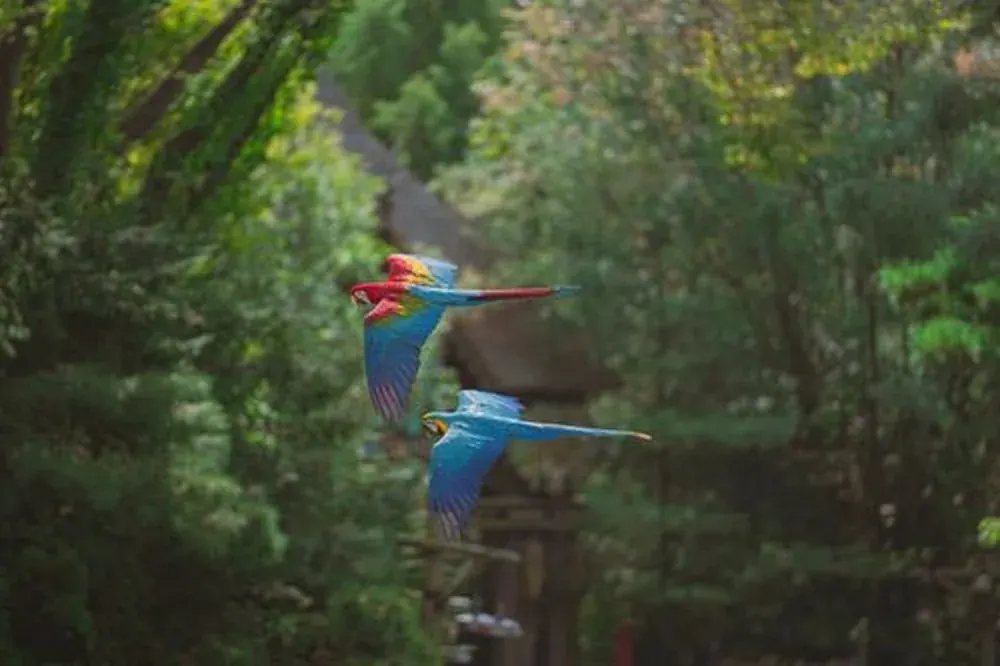
The Macaw Recovery Network, which works with rescued macaws in Costa Rica, describes allofeeding, mouth to mouth feeding between mates, as one of the behaviours that keeps a pair bonded for life. My friend Thandi has two macaws that have been together longer than most marriages I know.
She tells me they wake up and groom each other before either bird eats, feeding each other mouth to mouth in a ritual called allofeeding, the same act they'll later use to raise their young. Macaws pair for life.
They house hunt together, testing cavities high in the trees before committing to one. Watching them, Thandi says, taught her more about partnership than any book she'd read.
I don't have macaws. I have a crow that's followed me my whole life, not literally, but as a kind of totem, the bird I've always been drawn to without fully understanding why.
Crows remember faces. They hold grudges and loyalty in equal measure.
There's a reason cultures across the world have looked at that bird and seen a messenger rather than a pest.
What both birds teach, in different ways, is a kind of seeing we've mostly lost. A bird changes altitude and an entire landscape rearranges itself, same rivers, same roads, completely new shape.
Nothing about the world moved. Only the height did.
We stay fixed at ground level. Certain of our version of an argument, our version of a person, our version of what happened, gathering only the proof that agrees with us and calling that clarity.
Sometimes renewal isn't about changing what's in front of you. It's about changing the height from which you're looking at it and having the humility to actually use the wider view once you've got it.
What would you see if you let yourself go up even slightly, the way a bird does without thinking twice about it. The certainty you've stopped questioning.
The person you gave up trying to understand.