Oceans in Focus: A Visual Essay
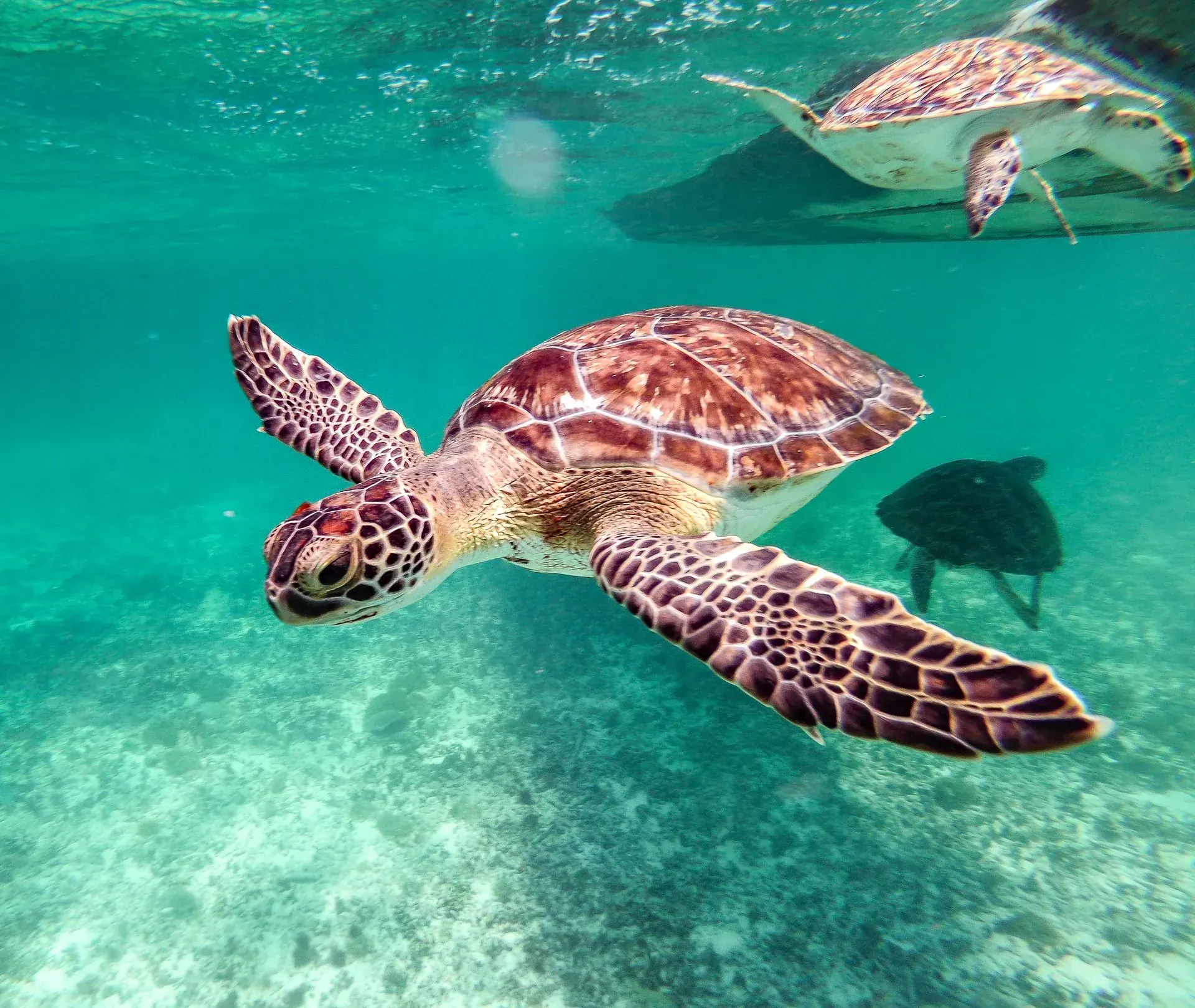
Marine phytoplankton generate something like half of the oxygen we breathe, an entire planet's worth of air moving through water with no edges. Two turtles moving through blue that has no edges.
Something that old shouldn't still feel new every time you see it and yet it does.
I read once about coral, ancient enough to have outlived empires, life-giving enough to hold entire ecosystems inside it. And I was struck by something I hadn't expected.
Something this old and this generous can also be destroyed, quickly, by things that took us no time at all to do.
The ocean forgives more than it should. We've put plastic in it, hunted its whales to the edge of memory and it keeps circulating, keeps giving oxygen, keeps being the water inside every living thing whether we've earned that or not.
Clean up even a small stretch of it and it answers immediately, clear again, alive again, ready for whoever comes next.
That's the part I can't stop thinking about. The ocean's patience with us doesn't match anything we've done to deserve it.
We're not so different, are we. Hatred, indifference, the small daily cruelties of assuming someone else's chance doesn't cost us anything.
And still, when someone clears the plastic off a single beach or offers a single person the opportunity they'd been shut out of, something responds immediately, the way water does, the way a body does when it finally gets to breathe.
We are, in the end, mostly water ourselves. Flowing, or meant to be.
Free, or meant to be. The ocean isn't a metaphor we chose for convenience.
It's just telling us the truth about what we're made of, if we're willing to listen.
What would it look like if you treated the people around you the way the ocean treats us, ready to heal the moment you stop causing the harm.