Eco-Tips for Everyday Living
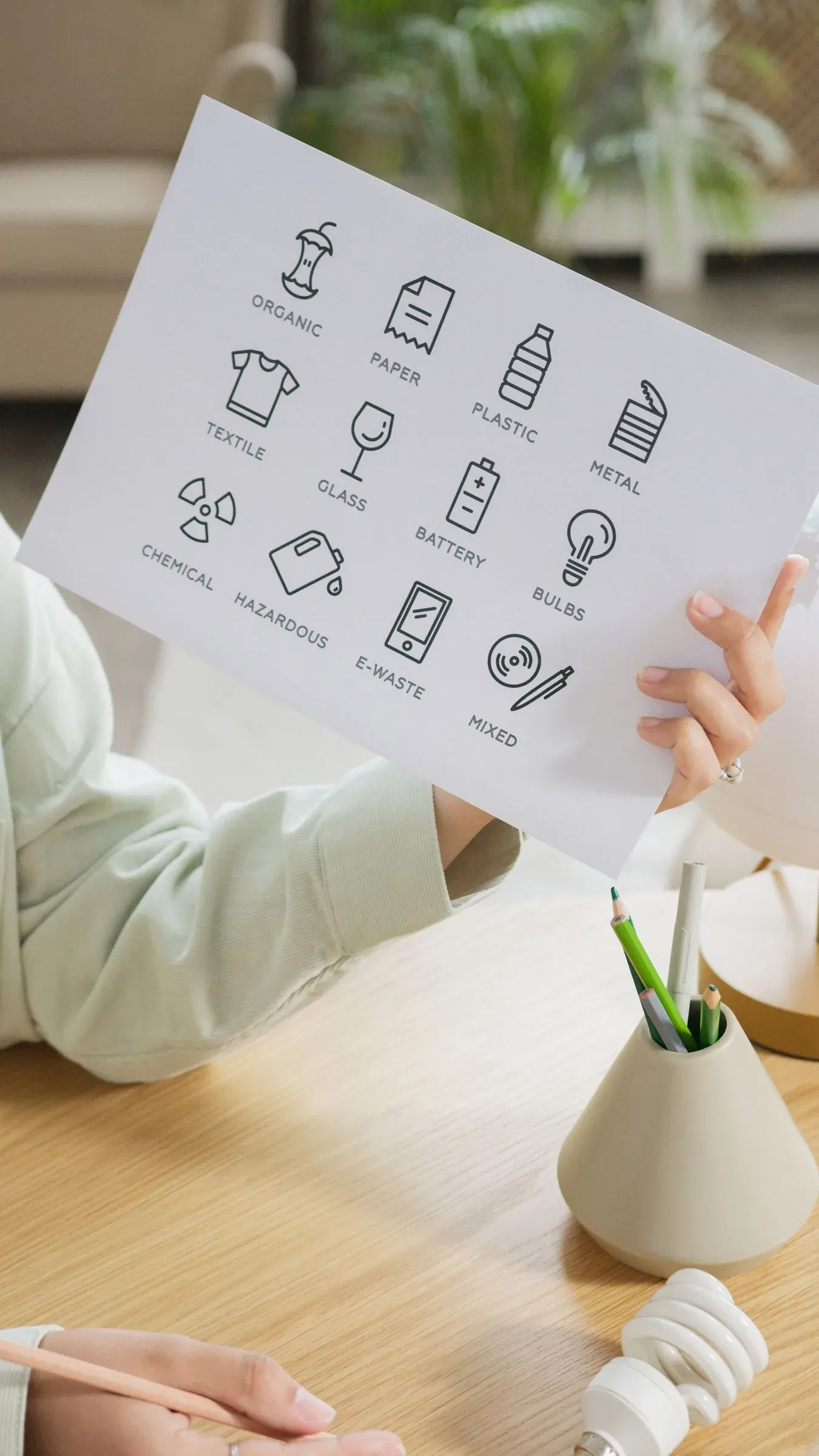
There is more gold in a tonne of discarded circuit boards than in seventeen tonnes of mined ore. Somewhere in a kitchen drawer, in a phone retired last year, in a pile of dead cables under a desk, there's a quantity of actual gold sitting there doing nothing, waiting either to be recovered or buried for good under everything else on its way to landfill.
That's what the sorting chart in the photograph is really doing. Organic.
Paper. Plastic.
Metal. Textile.
Glass. Battery.
Bulbs. Chemical.
Hazardous. E-waste.
Mixed, for whatever refuses every other category. It reads like admin.
It's actually a map of value most people throw straight into a bin without a second look, because looking twice at rubbish has never felt worth the effort.
I used to think sustainability meant giving something up so the planet could have it instead. I don't think that anymore.
Half of what gets thrown away isn't worthless. It's just misplaced, sitting in the wrong pile, waiting for someone to notice it belongs somewhere else.
Sorting isn't really about saving the planet in some distant, abstract way. It's about paying attention to what's actually in your hand before you let it go.
A battery isn't rubbish, it's a small toxic parcel that needs specific care. A circuit board isn't rubbish either.
It's ore that already went through the hard part.
None of that requires the sacrifice I used to picture. It requires ten seconds of actually looking at what's in your hand before deciding which pile it belongs to.