Conservation Begins with Attention
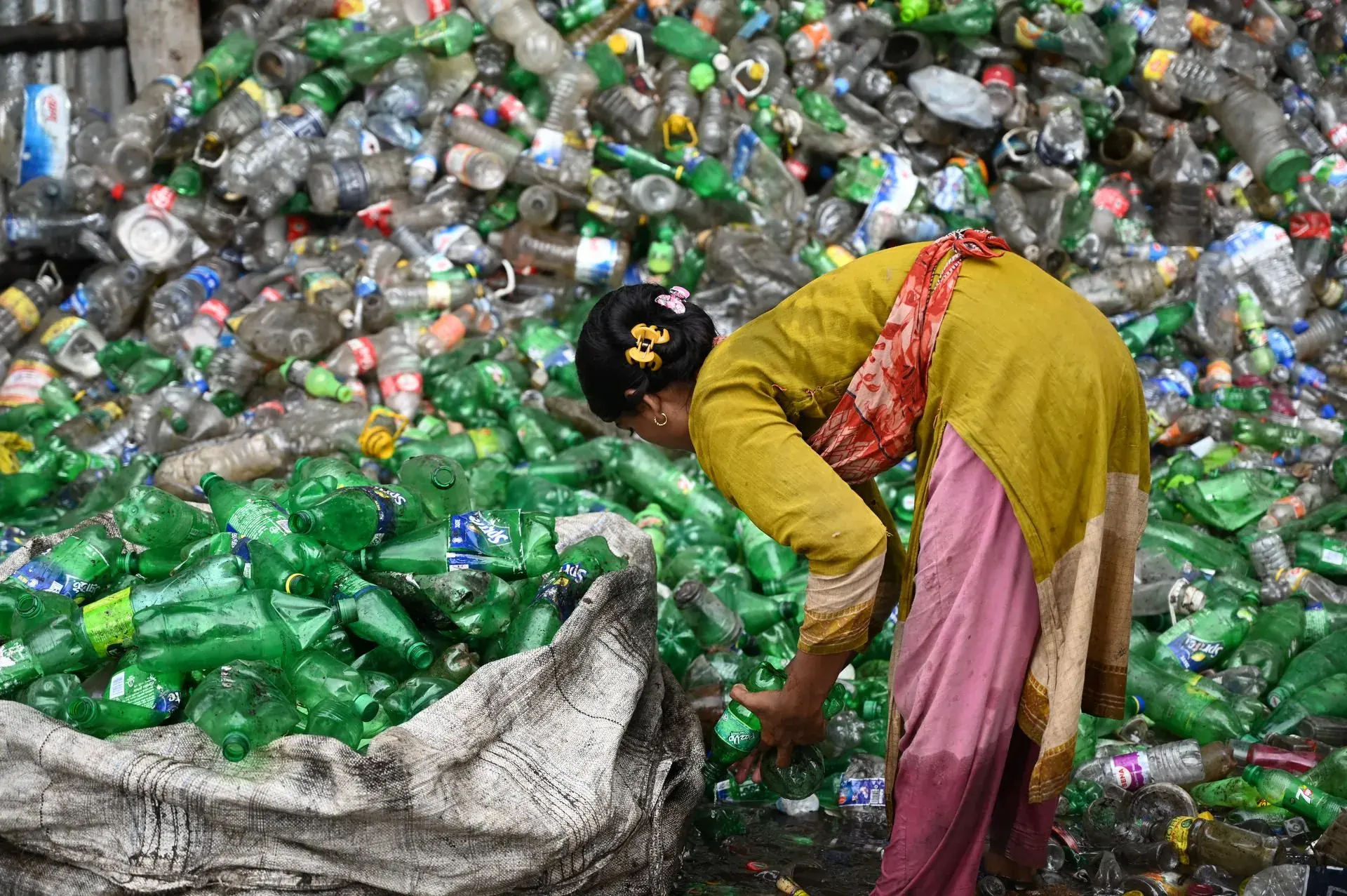
Somewhere between one and a half and four million people in India make a living sorting through what everyone else decided was worthless. In Delhi alone, they recover something like a fifth to a quarter of a ten thousand tonne daily waste stream, working outside any formal system, unregistered, unprotected and almost entirely unseen by the cities that depend on them without knowing it.
The woman in this photograph is part of a workforce nobody officially counts properly. Half a million of them, by one national survey, are women.
They're the reason so much of what gets thrown away actually gets used again instead of buried. Not because a system was designed for that.
Because someone looked, closely, at what everyone else had already stopped looking at and found value where the rest of us had decided there was none left.
That's the part I keep circling back to. Attention, real attention, isn't a soft skill.
It has an economic value measurable in tonnes and rupees, in landfill space that didn't fill up as fast as it would have otherwise. It's also, apparently, invisible labour, the kind an entire city can depend on completely while still managing not to see the person doing it.
I think about what I walk past without looking properly, most days. Not on a dump.
In my own kitchen, my own bin, my own life. It's a smaller version of the same failure.
Deciding something has no more value the moment I've stopped needing it, without ever checking whether that's actually true.
Somebody, somewhere, is always still looking. The least the rest of us can do is notice that they are.