What I Learnt from Travelling Alone
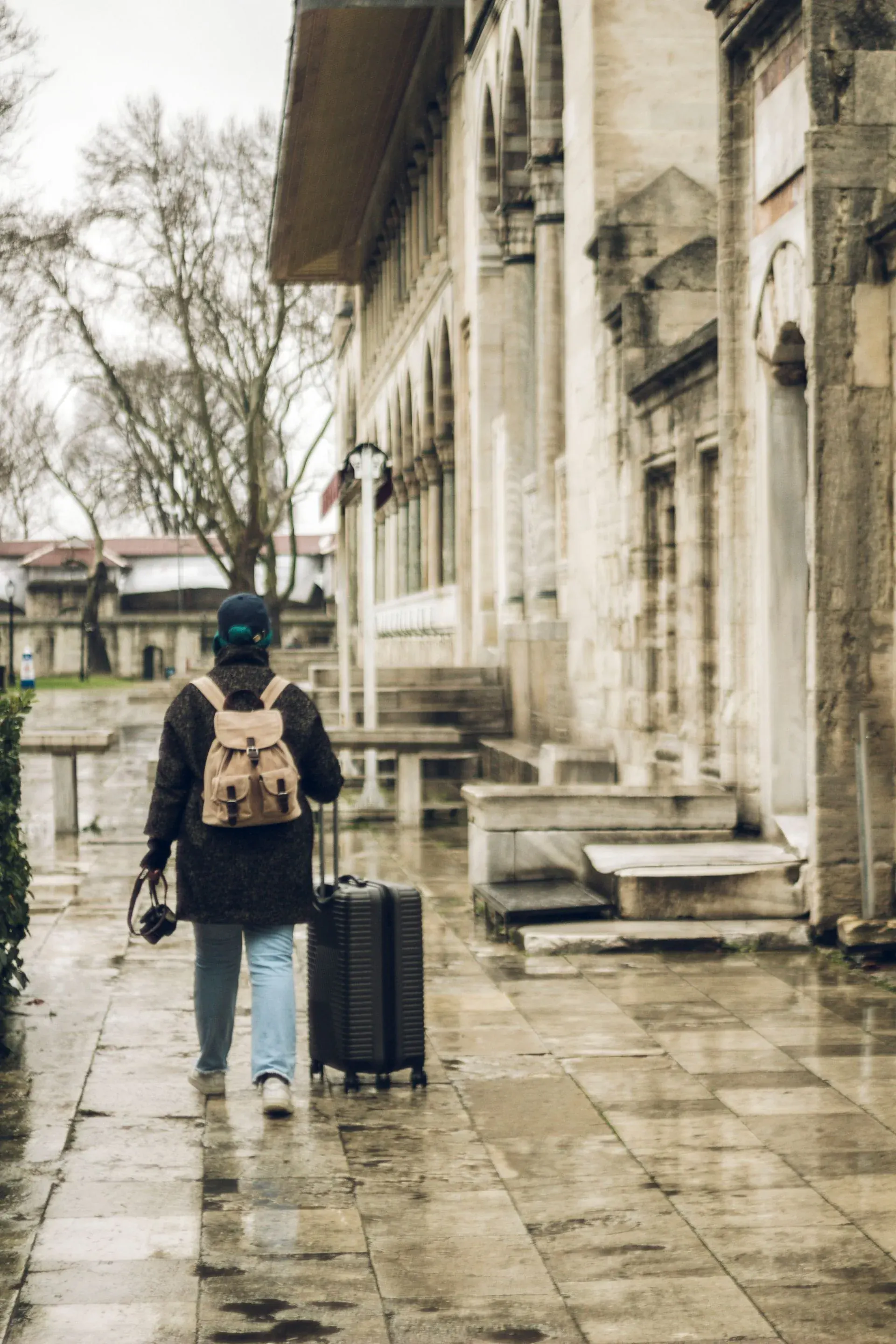
There is a peculiar kind of quiet the moment you button your coat and walk out by yourself, suitcase in hand. It is not loneliness exactly, more like the hush before a conversation.
You are about to be both the person who arranges the day and the person who receives it and that double role changes the way you notice things.
One practical lesson, learned through the small annoyances, is how little you need to be comfortable. When you travel alone you become honest about what matters.
A good pair of shoes, a scarf that doubles as a blanket, a notebook and the right kind of patience are worth more than any excess baggage. Plans become polite suggestions rather than rules.
I have missed a train and had a better afternoon because of it. I have accepted a stranger’s recommendation for a café and discovered a corner of the city that would otherwise have remained invisible.
The freedom to change your mind and the responsibility to do so without letting embarrassment win, is surprisingly liberating.
Talking to people I would not normally meet has been the most generous education. There is a strange alchemy in a one-on-one conversation where both people know the interaction will end and therefore feel freer to speak honestly.
I have listened to stories about first jobs, odd neighbourhoods, the way a particular season smells and in return shared small things about myself. Sometimes those exchanges are brief and perfectly ordinary; sometimes they linger and become something you carry back with you.
Learning to ask questions that are open rather than leading and to listen without thinking of the next line you will say, has been a small discipline that keeps paying off.
Travelling alone also exposes the murmuring voice you keep quiet at home. Without someone else’s rhythms to mirror, your own habits become obvious.
You find out whether you like mornings, how long you can sit in a café doing nothing before you want to move, what bores you and what sparks you. Silence stops feeling like a gap to fill and instead becomes a weather to observe.
That has been a tender kind of work; not dramatic, just steady. It has taught me to be less dramatic about my own doubts and more curious about their origins.
Decisions taste different when there is no one else to defer to; they are clearer and sometimes harder, but also truer.
Safety and kindness tend to arrive hand in hand. Being alone sharpens your instinct for when to be cautious and when to accept help.
I have learned to trust a polite warning as much as I trust a friendly smile. People who work in small hotels or on market stalls often offer practical advice that feels like a tiny pledge of good will.
And there is a responsibility in accepting that kindness: to be courteous in return, to be awake to someone else’s small act of care. It is a modest code, but it matters when you are far from the routines that usually anchor you.
Coming home after those solitary days is always surprising. The things I once overlooked become small luxuries again: the way the kettle hums, the familiar pace of a street, a friend’s predictable joke.
The experiences from being away do not vanish, they sit quietly beside daily life and sometimes reshuffle it. I find myself making different choices, speaking with more clarity, or simply pausing to notice a detail I would have missed before.
I do not travel alone to become a different person overnight. Mostly I travel to practise paying attention, to sharpen ordinary kindness and to learn how to keep company with myself.
The lessons are small and accumulative, like coins in a pocket and they tend to show up later when you are least expecting them.