A Face Is a Design Decision
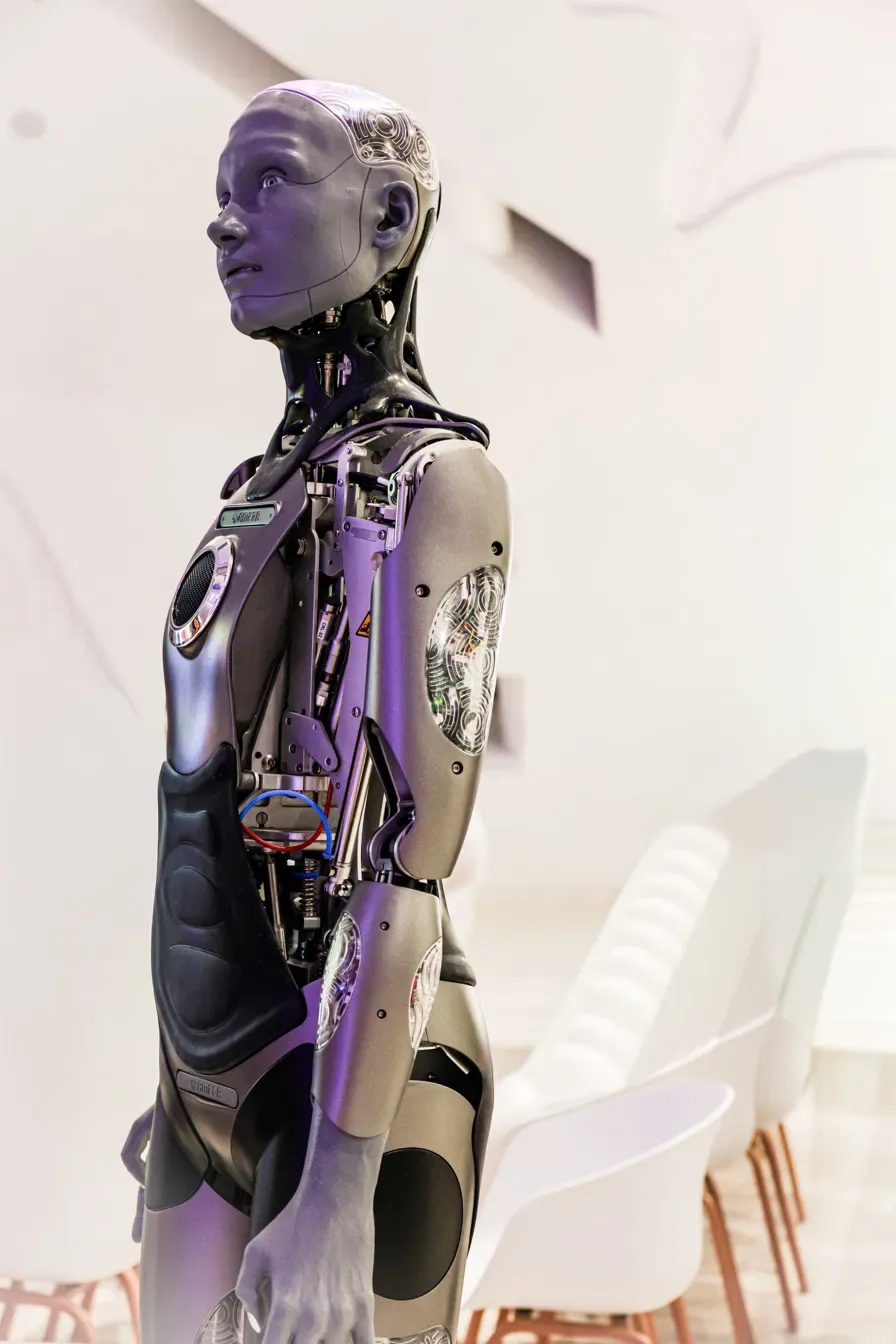
A machine built to look human is unsettling in a particular way. The face is nearly right, and the nearly is what gets you.
What interests me isn’t the strangeness. It’s that somebody chose it. A machine that fetches things doesn’t need a face. A machine that answers questions doesn’t need shoulders, or a gaze, or a head that tilts when you speak. Every one of those was a decision, made by people, for a reason.
And the reason is us. We hand things over more readily to what resembles us. We interrupt it less, forgive it more, and assume there’s something behind the eyes doing the thinking. The face isn’t there to help the machine work. It’s there to help us go along with it.
You can see the softer version of this everywhere, long before anything grows a body. The chirpy little name. The typing dots that appear before an answer, as though something were composing a thought. The confident, warm, unhurried voice that never says “I’m not sure why I said that”. None of it is a lie, exactly. It’s a design choice, and it’s doing a job.
The job is trust, and trust is being manufactured far faster than reliability is.
That’s the bit worth holding on to. Warmth is cheap to produce and easy to fake. Accuracy is expensive and unglamorous. When something addresses you kindly, in fluent sentences, with no hesitation at all, you are receiving evidence about its interface and no evidence whatsoever about whether it’s right.
I’m not arguing for suspicion of everything with a friendly surface. That’s an exhausting way to live, and most of these tools are genuinely useful. I use them daily. But I try to keep two things separate in my head: how something feels to deal with, and whether it can be relied on. We’re built to merge those, which is precisely why the face is there.
So when a tool is pleasant to me, I take the pleasantness as design, not as character. Then I ask the ordinary questions. Who built this, and what do they want from me? What happens to what I tell it? How would I find out if it were wrong?
You wouldn’t buy a car because the salesman smiled. It’s the same thing, only the smile has been engineered by a team, tested on thousands of people, and refined until it works. I’ve written about the related question of when technology has to say so, and disclosure helps. But the surface will always be friendlier than the substance, because the surface is the part they can control.